
Mastering the Commercial Kitchen Layout for High-Volume Corporate Campuses

Campus dining compresses a whole day of service into one sharp peak. See how the floor plan decides whether that lunch rush flows or jams at noon.
Government and Military Foodservice Design: What Federal Projects Require

Federal foodservice projects run on rules civilian work never touches. See what procurement, security, and feeding scale change before the first drawing.
What ANC 2026 in Charlotte Is Really Telling Us About K-12 Kitchen Design

I have been watching the ANC program build out for a few weeks now. This year it lands in Charlotte, which means I will actually be in the room. That changes how I read it. What the sessions are describing, across labor, dietary complexity, and menu adaptability, is a facility problem. The foodservice design conversation […]
Getting Ultra-Processed Food Out of School Meals: What Scratch Cooking Means for K-12 Kitchen Design
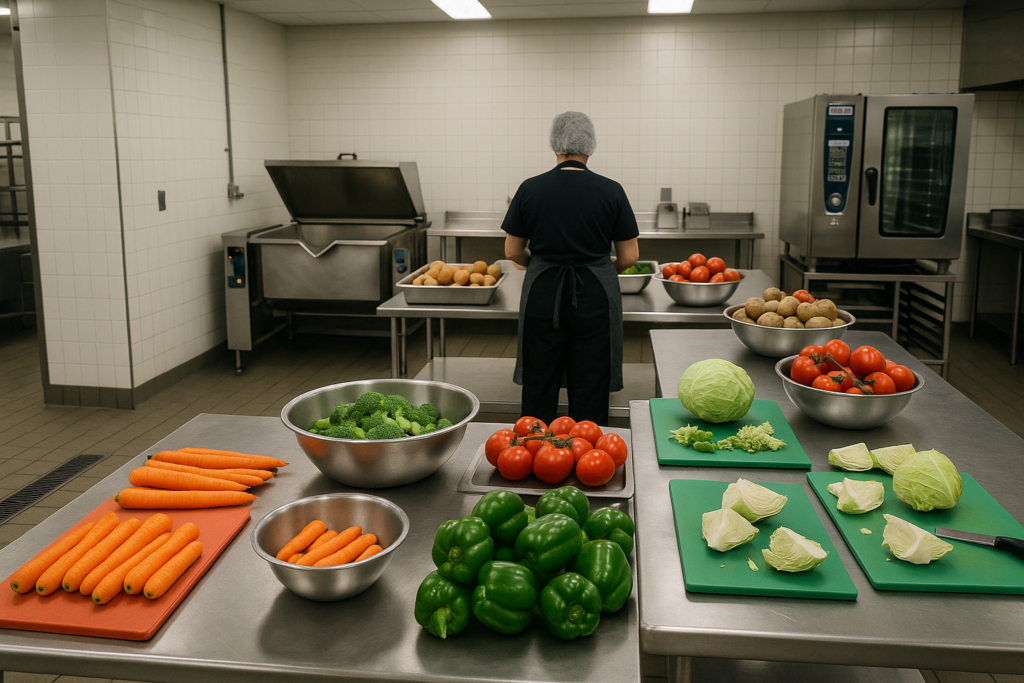
Districts are being pushed to cook more from scratch and serve fewer ultra-processed products. That’s a menu decision with a building consequence. Scratch cooking at school volume needs prep space, equipment, and storage that most K-12 kitchen design from the heat-and-serve era simply doesn’t include. In This Article Scratch Cooking Is a Prep Problem First […]
Data, Innovation, and the Modern Campus Kitchen
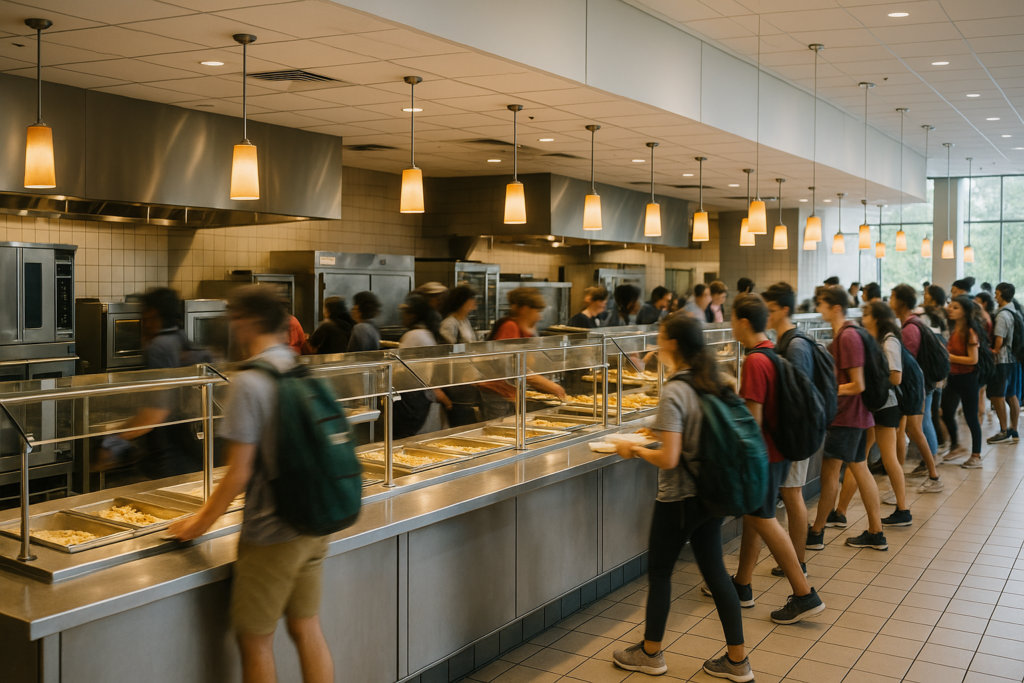
Campus dining is being asked to do more than it was built to do. The data tells the story: more meal periods, more dietary tracks, more transparency. Most of that pressure lands on a kitchen that was planned for a different era, which makes foodservice design the quiet variable in almost every campus dining decision. […]
2026 Commercial Kitchen Design Trends

What the 2026 NRA Show signals about automation and smart equipment in commercial kitchen design. Practical implications for architects and project teams.
Six Things That Changed in 2026 That Make Early Kitchen Coordination Non-Negotiable
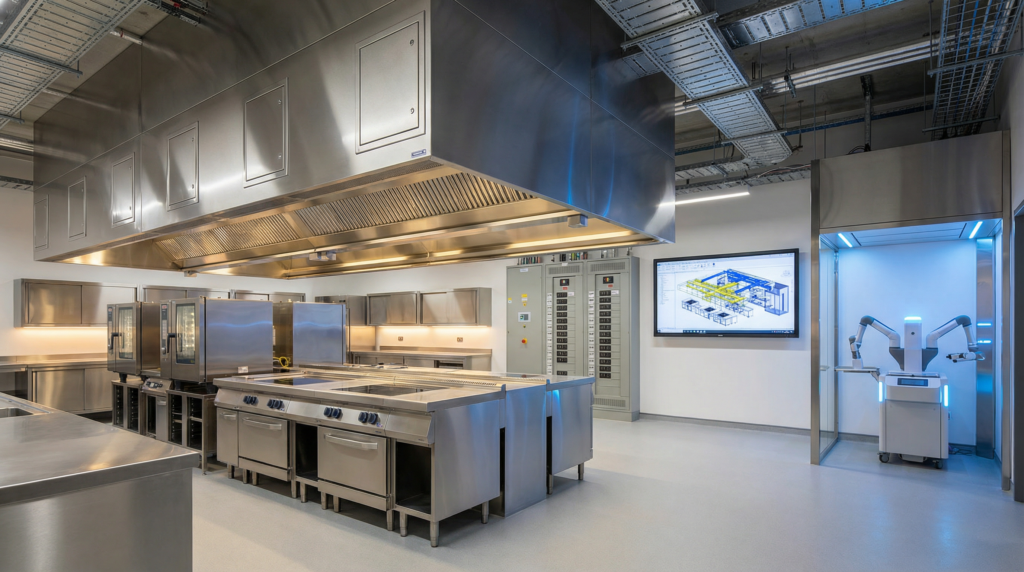
2026 Executive Summary: In 2026, the transition to all-electric commercial kitchens and the arrival of robotic infrastructure (LOD 350) have moved kitchen coordination from a late-phase task to a Schematic Design requirement. Mandatory codes like California’s Title 24 and NFPA 96 (2025) now dictate electrical loads and fire suppression specs that can no longer be […]
Designing for Water Quality: What Needs to Be Coordinated Early
What needs to be in your design documents to address water quality in commercial kitchens. A coordination guide by phase for architects and consultants.
Water Quality and Its Direct Impact on Equipment Performance

How water quality affects commercial kitchen equipment performance. What architects and owners need to understand before the facility design is complete.
Foodservice Equipment Longevity Starts with Infrastructure

Why foodservice equipment fails early, and how the right infrastructure decisions during design protect performance and reduce lifecycle cost.